This webpage provides additional supporting information for my Oxford Humanities Incubator Scheme Expression of Interest application, ‘Triple Enlightenment’.
EXECUTIVE SUMMARY
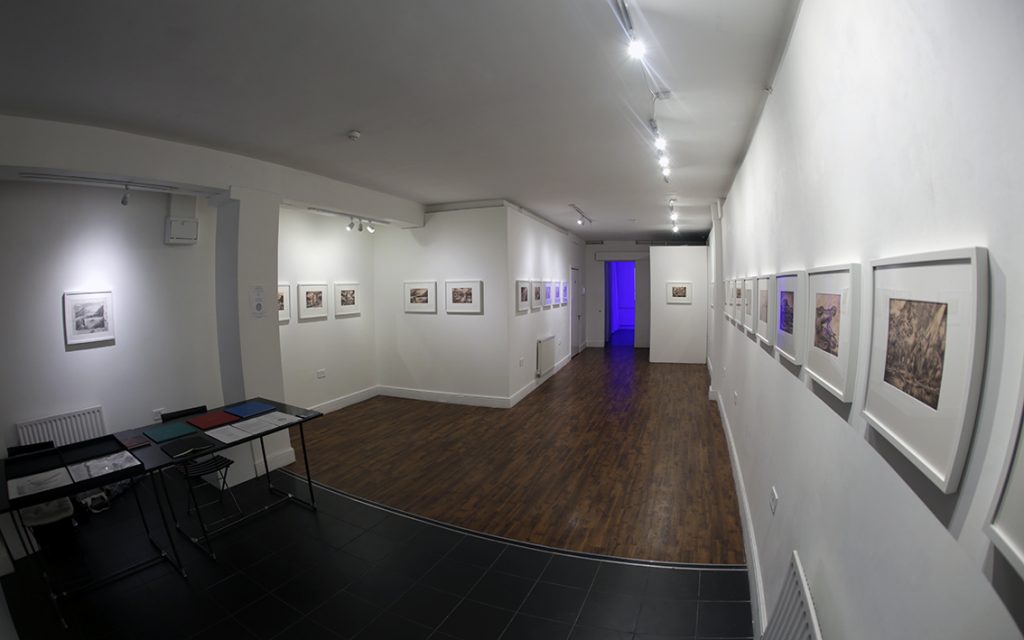
‘Triple Enlightenment’ is a trilogy of multi-media artist’s projects on which I have been working since 2016, and aim to complete by 2028. They are set in locations on the Indian sub-continent in the past, present and future.
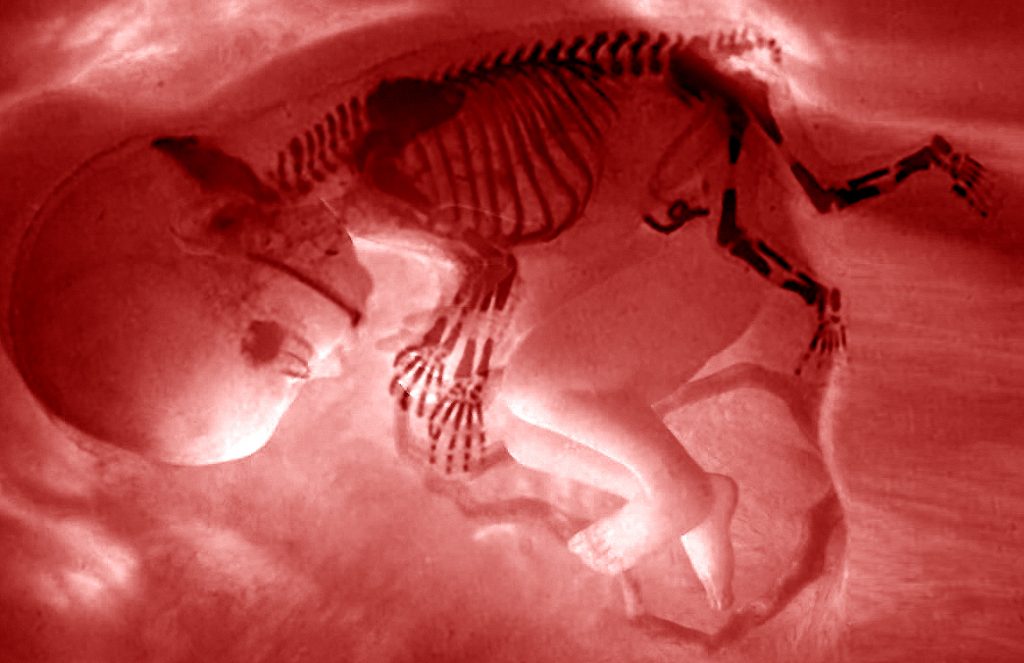
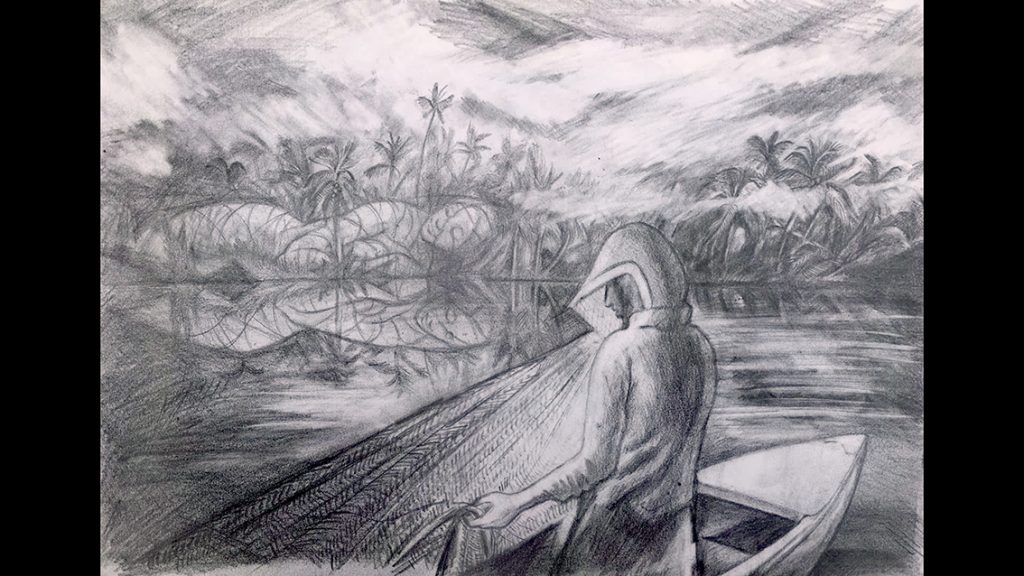
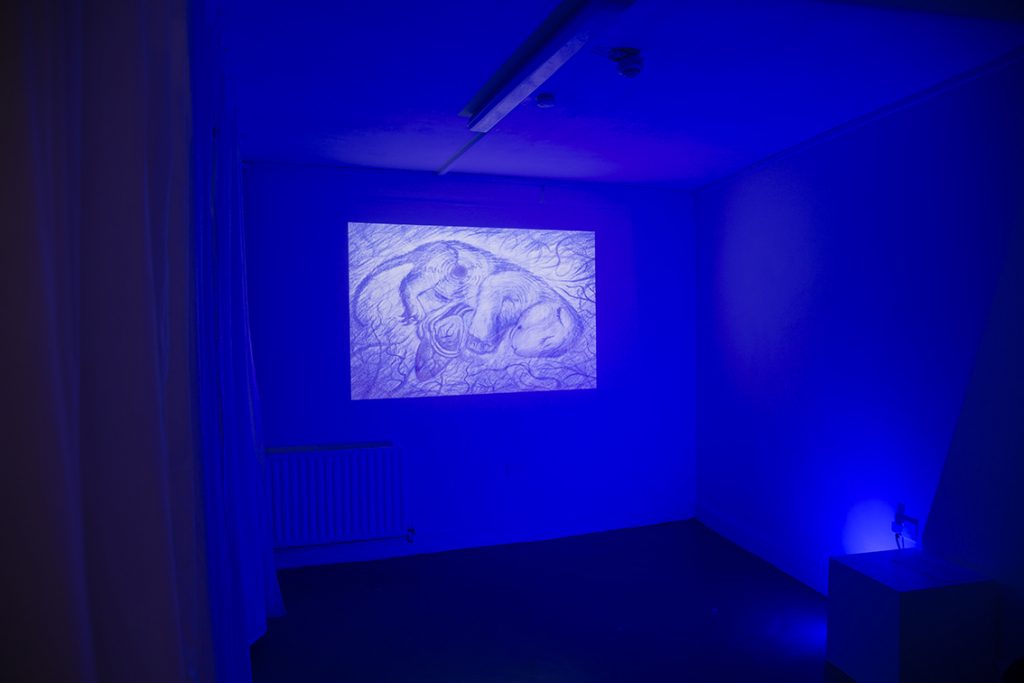
The first part of the trilogy, ‘Queen Maya’s Prophecy’ (in post-production) is set in 550 BCE. In this short film, with accompanying paintings and prints, we see the Buddha in utero, and hear the voice of his mother, Queen Maya, as she speaks to her unborn child in rhyming verse.
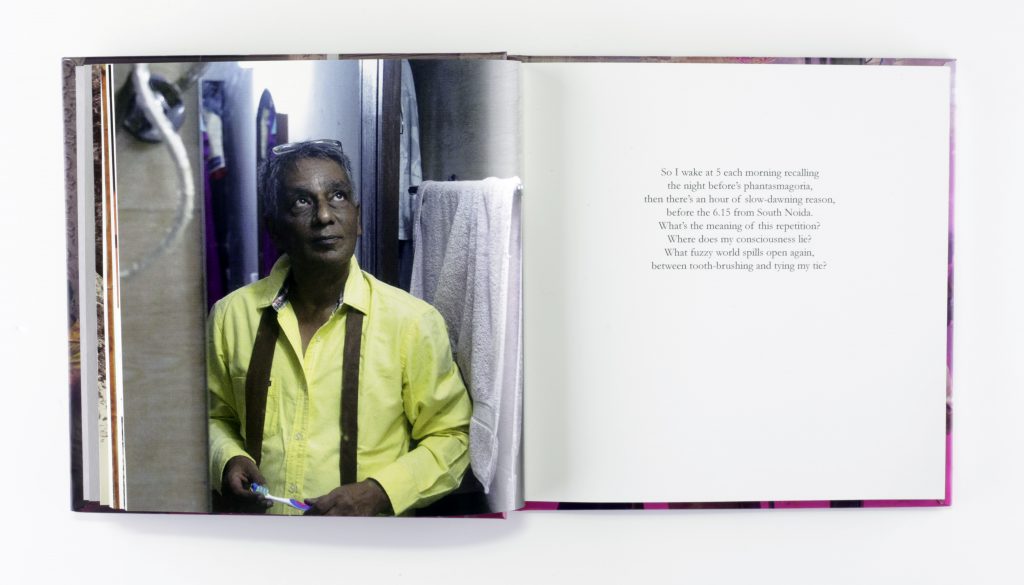
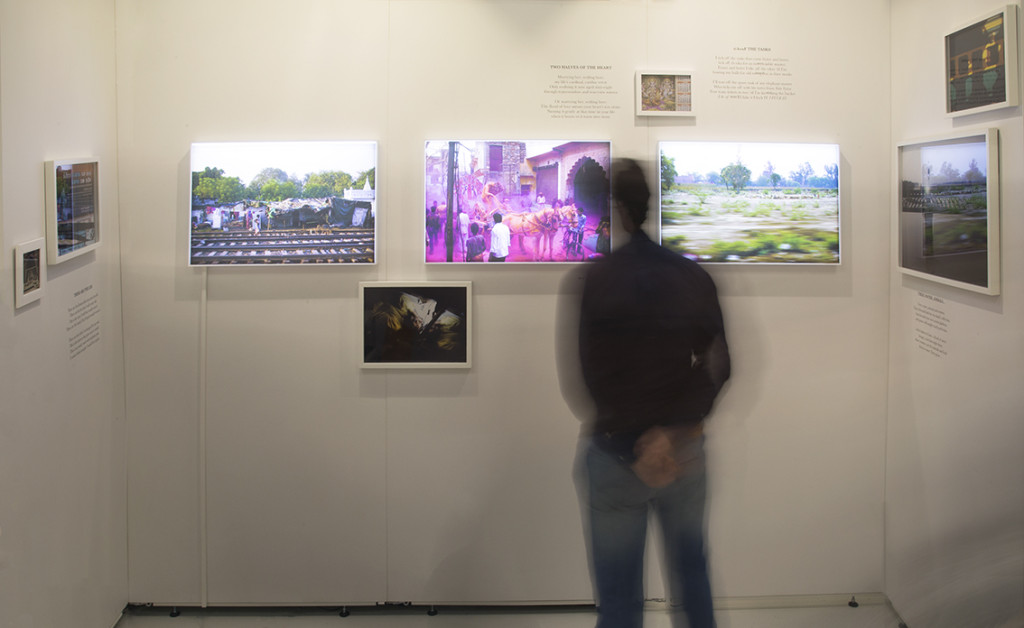
The second part, ‘Reversed Curses’, is set in contemporary Delhi and is composed of an artist’s book and accompanying photographs and prints. Using the sacred Hindu text the Bhagavad Gita as a frame story, readers and viewers experience the stream of consciousness (in the form of rhyming quatrains) of Aarav, a railway clerk approaching retirement and questioning his faith as he commutes to and from work. Aarav’s interior conversations begin with his god Krishna, a superego whose voice transforms into those of many others. The drama moves from playful humour to a fight for Aarav’s sanity.
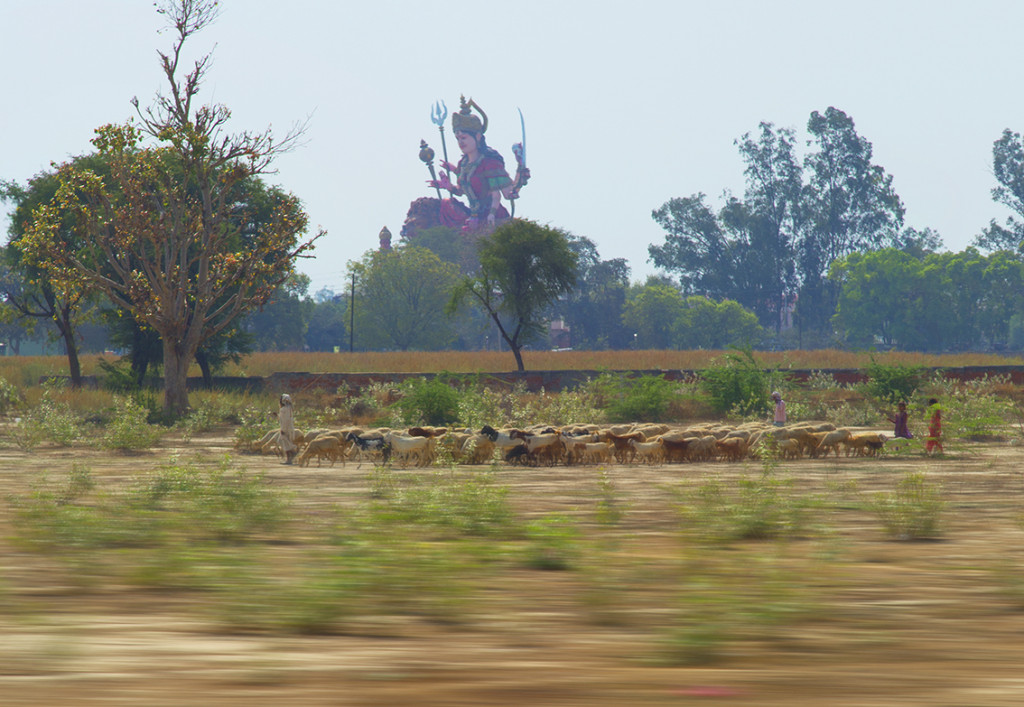
‘In Indra’s Net’ concludes the trilogy. In the year 3222 AD, two botanists collect data, make scans using a mysterious machine, and take notes during a field trip where, 4,000 years earlier, the Buddha is said to have achieved Enlightenment. Their rhyming dialogue questions their work, the moral problems science must address, and its relationship to spirituality and power.
PARTNERS & OUTPUTS
ABOUT MY WORK
I am a poet, artist and critic. I am also a Senior Ruskin Tutor on the BFA and DPhil programmes at the Ruskin School of Art, Oxford University, and a Visiting Lecturer and Guest Professor at colleges and universities in the UK, Spain and China. I work across media, but especially with poetry, drawing, photography and film, exploring the complex relationship between words and images, in particular the temporal character of the former, and the spatial character of the latter. Recurring themes are love, memory (especially its relationship to history and place), and spirituality. I am influenced by Surrealism, the environmental crisis, psychoanalysis, and world mythologies, particularly those of Ancient Greece, Ancient Rome, Hinduism and Buddhism.
Prizes for my writing, art, lecturing and academic studies include: the BOC Group Emerging Artist Award; the Magenta Flash Forward Photographers’ award (Magenta Foundation, Canada); the Fitzgerald Prize and Stapledon Scholarship (both Exeter College, Oxford University); and the Geoffrey Rhodes Commemorative Bursary for the most outstanding student in the Preliminary Examination in Fine Art, Ruskin School Art, Oxford University.
Grants and awards include: Arts Council England (three individual awards, and multiple awards as part of larger groups); The Fenton Arts Trust; The Eaton Fund for Artists, Nurses and Gentlewomen; Kyoto City University of the Arts, Japan; LASALLE College of the Arts, Singapore; Royal College of Art, London; and the Arts and Humanities Research Council (UK). I have also received three teaching and research awards from Oxford University: the Ruskin School of Art, (Teaching Award), the Higher Education Innovation Funding Award and the Oxford Research Centre in the Humanities (TORCH).
AGREED PARTNERS
Science Lead for ‘Triple Enlightenment’, Associate Professor Amaia Salazar
Dr Salazar’s artistic practice explores the fragile boundary between the visible and the invisible: between the body and the mind, science and myth, perception and belief. Through photography and interdisciplinary research, she investigates how symbolic and emotional experiences reveal the complexity of human cognition, and how culture and neurophysiology shape the way we see, feel, and remember. She has given more than 55 lectures, seminars, workshops, and talks in international Congresses at the University of Oxford, the University of Bologna, the Complutense University of Madrid, the Manchester School of Visual Arts, Cervantes Institute, the MediaLab Prado, and the Fundación BilbaoArte of Bilbao, among others. She advocates for art as an essential tool for health and emotional well-being. Recently, she has given a TEDx talk about the importance of art in enhancing both physical and emotional health.
https://www.youtube.com/watch?v=94gagBj_AUg
Curator/speaker/panellist for ‘Triple Enlightenment’ (exact role TBC): Dr Yuval Etgar, Art Historian, Curator, Visiting Tutor, Ruskin School of Art
Specialising in the history and theory of collage and image appropriation, Dr Etgar has edited and authored books and exhibition catalogues on the subject, including ‘The Ends of Collage’ (Luxembourg & Dayan, 2017), an anthology of writings that examines the historical, technical, and material boundaries of this practice, as well as ‘Out of Order: The Collages of Louise Nevelson’ (Mousse Publishing, 2022), ‘Man Ray: Other Objects’ (Koenig, 2023), and ‘Vitamin C+. Collage in Contemporary Art’ (Phaidon Press, 2023). Since 2016 he has been affiliated with the London and New York based gallery, Luxembourg + Co. (formerly Luxembourg & Dayan), where he directs the research and exhibitions programme. Since 2019 he is also the Adjunct Curator of the Bauhaus Foundation, Tel Aviv.
I first met Dr Etgar when he was a DPhil candidate at the Ruskin and assisted me on a student workshop which I wrote and I delivered, and we have kept in touch since then.
Curator/speaker/panellist for ‘Triple Enlightenment’, (exact role TBC): Dr Diva Gujral, Historian & Art Historian, Extraordinary Junior Research Fellow in the History of Art at the Queen’s College, Oxford
Specialising in twentieth-century Indian photography and visual culture, Dr Gujral is also a Leverhulme Early Career Fellow at the Ruskin School of Art. Dr Gujral’s work places visual culture in modern and contemporary India in conversation with the country’s changing political landscape. Her book project, ‘Many Modernisms: Photography, film, nation and identity in non-aligned India (1950-75),’ draws on her doctoral research. The project examines practices of photography and film-making that developed in India in the first few decades of its independence, exploring the relationship between these varied modernist vocabularies and India’s policy of non-alignment.
I first met Dr Gujral at an Oxford Contemporary Art History & Theory graduate seminar, and we have kept in touch since then. This will be the first time we have worked together.
PROPOSED PARTNERS
PANEL 1 (CLIMATE CHANGE)
https://www.biology.ox.ac.uk/article/profile-man-qi
https://www.earth.ox.ac.uk/people/hauke-marquardt#collapse4752301
https://www.earth.ox.ac.uk/people/kamini-manick
PANEL 2 (MINDFULNESS & APPLIED MEDITATION)
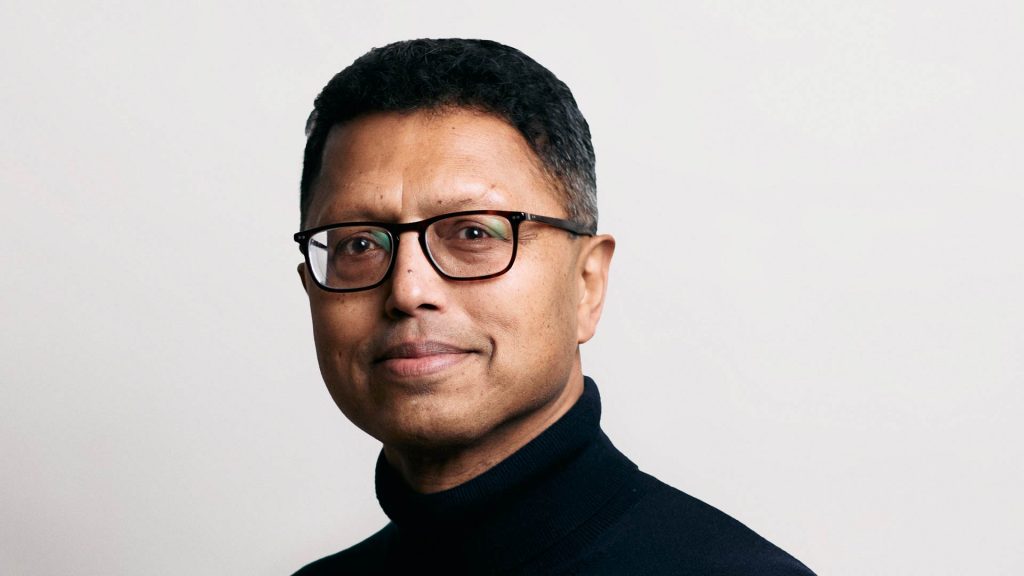
https://www.ndcn.ox.ac.uk/team/masud-husain
https://www.win.ox.ac.uk/people/vaanathi-sundaresan
https://www.psych.ox.ac.uk/team/willem-kuyken
FURTHER PROPOSED (POTENTIAL) PARTNERS FOR PRESENTATIONS AND/OR PANEL CONTRIBUTIONS
https://www.torch.ox.ac.uk/medical-humanities-research-hub
http://www.ochs.org.uk/jessica-frazier/
https://ocbs.org/ven-dhammasami
AUDIENCE
With project management support from the Cultural Programme, we would expect a substantial audience for the project from regular users of the Schwarzman Centre and high attendance figures from across the university. We would target a wide range of departments, especially, from the Humanities Division: the Ruskin School of Art, the Institute for Ethics in AI, the History of Art department, and the Faculties of Asian and Middle Eastern Studies, Classics, English Language & Literature, History, Philosophy and Theology & Religion. From Mathematical, Physical & Life Sciences Division: the Departments of Biology, Chemistry, Earth Sciences and Physics. From the Medical Sciences Division, the Departments of Biochemistry, Clinical Neuroscience, Experimental Psychology, Psychiatry, and the Nuffield Department of Women’s & Reproductive Health. From Social Sciences Division, we would target the Schools of Anthropology & Museum Ethnography, Geography & The Environment, and the Departments of Education and International Development. In the Department for Continuing Education. We would also reach out to the Astrophoria Foundation Year and the Oxford Lifelong Learning Centre.
Further reports which give evidence of the level of current UK public engagement in Arts-Science interdisciplinary projects: